Showing posts with label peas. Show all posts

Saturday, May 4, 2013

Cauliflower and Peas

Cauliflower

I haven't tried growing any brassica crops before this year, and had intended to put down cauliflower, brocolli and brussel sprouts, however this all got turned on its head when I planted way, way too many cauliflower. I had no idea how large these plants would grow, and now have ended up with a veritable sea of cauliflower plants in my garden bed.

Cauliflower plants have huge leaves and take up tonnes of space!

My Field of Cauliflower

The seedlings begin life deceivingly small, however following the seed packet instructions, I planted them at their minimum distance of 50cm. Next time I will give them about 60cm between plants, because their leave are huge, and I feel they are a little cramped. I initially started my seeds in January and planted them into a newly dug garden bed in February. Today most of the plants still do not have cauliflower heads growing except for one. which looks like it will be ready to be picked in a few days.

Cauliflower head

  Cauliflower pests!

White Cabbage Butterfly

By far the most destructive pest to the cauliflower is the caterpillars of the white cabbage butterfly, pictured below source.

White Cabbage Butterfly
These butterflies lay clusters of eggs under the leaves of all brassica plants, as well as some other varieites as well. In Canberra, they are everywhere, at first I would try and chase them down with a hose or stick, but as the relentless armies of butterflies fluttered forward towards my plants I have resigned myself to finding and squishing the caterpillars as I find them.

The butterflies are attracted to the plants by the smell of the plants leaves, and do a characteristic 'double touch' before laying their eggs on the undersides of the leaves. The first touch is to identify the host plant, and the second touch is to lay the eggs once an appropriate food source has been found. 

The butterfly lays small yellow eggs, either in clusters or spread out on the underside of the leaf, and can fairly easily be removed, or squished. After they hatch the caterpillars begin life as tiny green little devils who grow in to fatter green devils as they age.

White Cabbage Butterfly Caterpillars 
   
Leaf Damage Caused by White Cabbage Butterfly Caterpillars 
More Leaf Damage

Aphids

Most every gardener knows of aphids, the small sap sucking insects often farmed by ants, and they seem to love my cauliflowers, although only recently making an appearance. I am currently looking into an organic control method for these suckers, and I have heard a concoction of chilli and dishwashing liquid might do the trick, if anyone has any secret recipes they would like to share, post below!


Aphids hiding in a curled up portion of leaf

Peas!

Well two months ago I posted about my pea seedlings coming up, and today I took my first small harvest of sugar snap peas. 

First Harvest!

I am growing shelling peas, and sugar snap peas, and both are doing well, although the shelling peas have only just begun flowering. The peas are growing both in pots and in ground, and for whatever reason they much prefer the pot environment growing large healthy leaves, and thick stems. The plants in the ground receive a few hours less sun each day and are much wimpier in comparison, although only planted three weeks later.

March 2013

April 2013
 May 2013
May 2013 - Relatively small plants growing in the ground (planted three weeks later)
These peas have been quite simple to grow, however do seem to drain a fair bit of water from the soil, requiring water every 2 days, or else they begin to wilt. They have not been harassed by any pests.. Yet!

The flowers on the pea plants, I find quite attractive as well, although plain and white.

Pea Flower


Thursday, March 14, 2013

Peas and Caterpillars!


Peas!

On the first weekend of March I planted some peas as an Autumn crop. I originally bought 3 heirloom varieties, Greenfeast, Telephone and SugarAnn. I was very worried after I planted them as the day afterwards began an extended heatwave with temperatures at about 30oC every day.

Peas enjoy a cooler temperature for germination, around 23-26oC and so I tucked them up under a bush by the wall of the house that only gets morning sun, and crossed my fingers.

Happily, on Tuesday morning I could see the first of the peas had come through, and today with the approach of cooler weather I have moved them out into their growing location. I planted two of my three varieties, SugarAnn and Telephone. Of these the telephone are climbers, while the SugarAnn is a bush type.

I planted these seeds in a soil-less mix, and have had exceptionally good germination rates, despite the hot days we have been having.


Caterpillars!

Over the past few week I have been observing some caterpillars that have taken up residence on my young orange tree. Normally caterpillars receive an immediate eviction notice, and are out of my garden, however these caterpillars are the larvae of the Citrus Swallowtail Butterfly,and so I allowed two to remain, to munch away in peace.

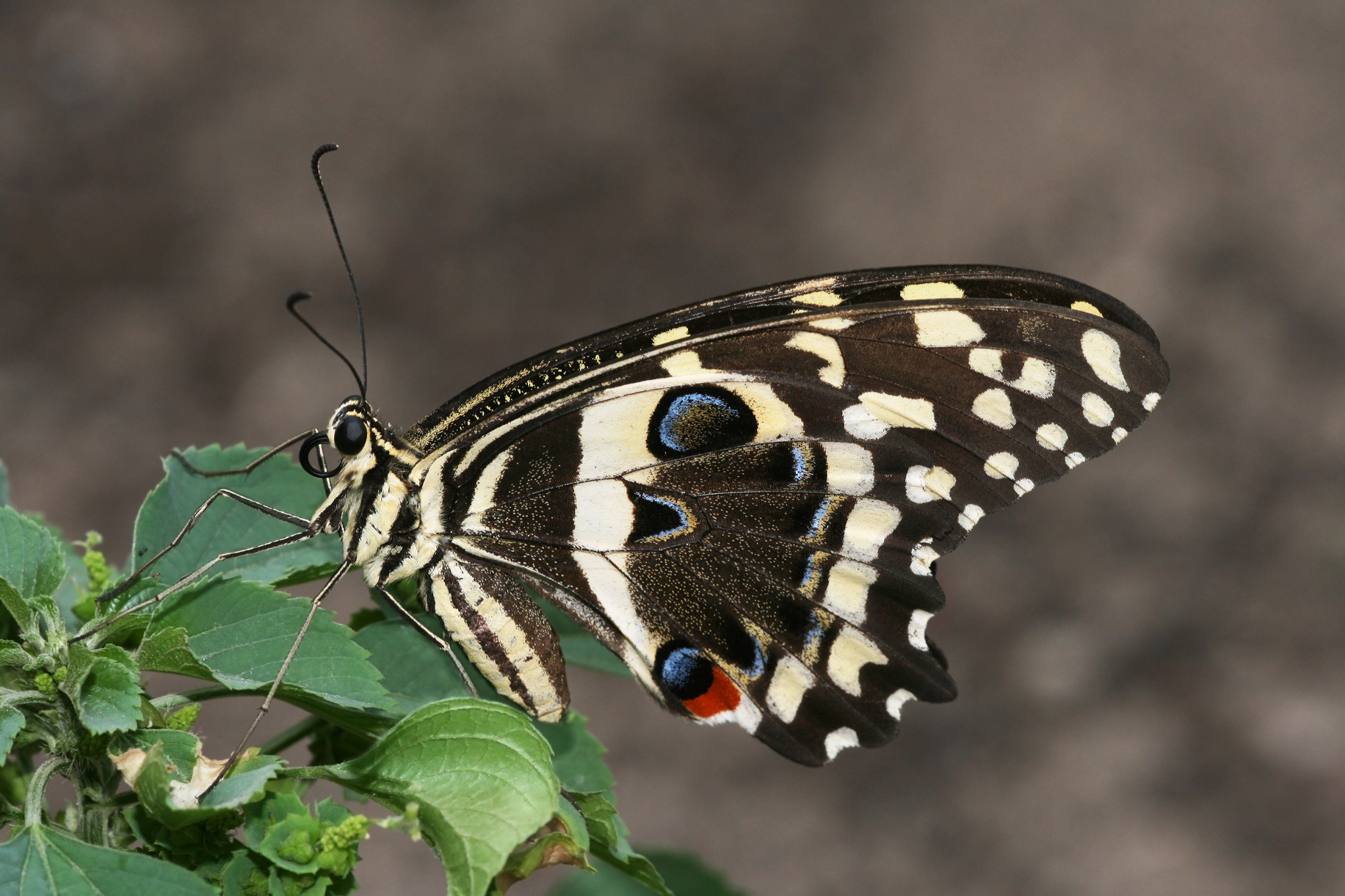
This butterfly is much larger than the usual butterflies seen fluttering around the garden, and are quite magnificent to watch. Although I couldn't snap a good picture of these butterflies myself, Google has helped me out (source Wikipedia);


Apart from their beauty, there are some very unique things about these caterpillars, that convinced me to allow a select two to remain on my orange, despite all the leaves the consume!

Firstly, these caterpillars begin life looking quite, well, poopy. That is to say they look like little bird droppings on leaves. This is a method of camouflage, and quite interesting, as they bare quite the resemblance!

After the caterpillars age, they take on a new colour and look, and become slightly more reminiscent of the butterflies they will someday be! Below are a few pictures of these caterpillars at different life stages.


Since these photos, I have lost the large green caterpillar, possibly to birds or wasps, but the second is growing and will soon take his place, and hopefully begin to prepare for the pupae stage of his lifestyle.

Although these caterpillars lose their bird-poo camouflage as they mature this doesn't mean they are totally defenceless. In these final pictures of my last caterpillar you can see where I have aggravated him a little, and from his head emerge two red antenna-like structures. These red organs produce an offputting, bitter smell to deter predators, and serve as the last line of defence before being eaten.

If this little guy survives I will provide updates on his progress to butterfly-hood. For reference purposes, I think I shall name him Sammy. Sammy the caterpillar.

Peaceful-Sammy


Angry-Sammy


Latest Posts